
Urban Renewal Industry Leaders Forum 2026
Urban Renewal Industry Leaders Convene to Discuss the Challenges of Moving from Planning to Execution
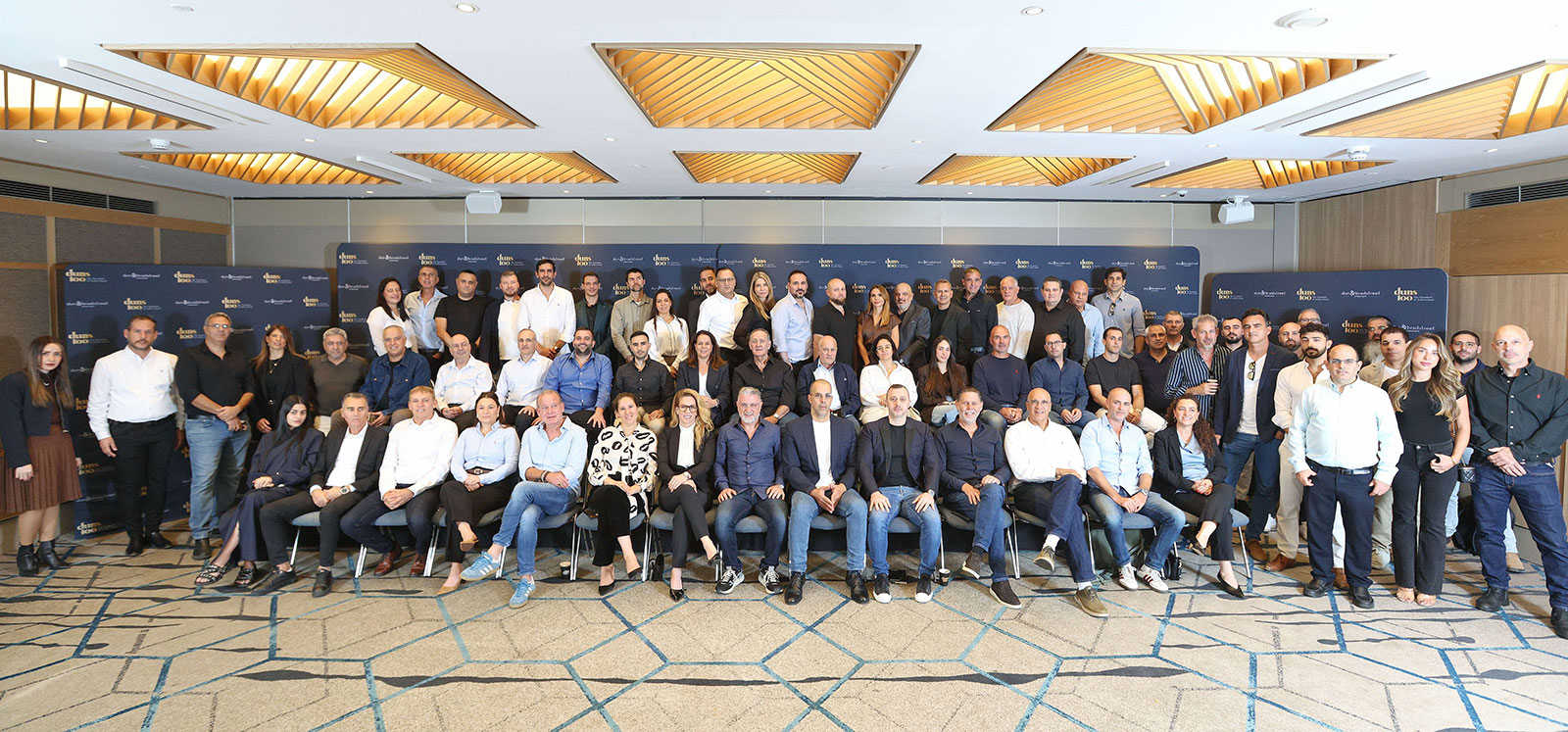
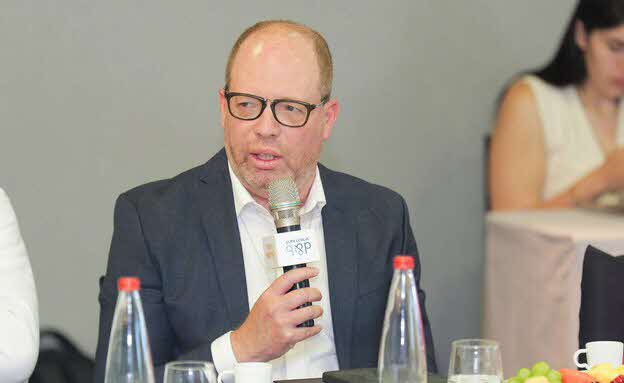
On November 25, 2026, Duns 100, part of Dun & Bradstreet, held its annual Urban Renewal Industry Leaders Forum at the Hilton Tel Aviv. The forum’s guest of honor was Ran Kunik, Mayor of Givatayim.
The forum brought together leading industry figures for a professional discussion on the key issues facing the sector today, from the urgent need to improve the protection of residential buildings amid the ongoing conflict, through labor shortages and the impact of interest rates on project feasibility, to the financial barriers facing local authorities.
At the heart of the discussion was the question of how to advance projects from planning and approval to construction, as the need for residential protection and urban renewal grows while uncertainty surrounding financing and construction costs persists.
A Professional Dialogue with Israel’s Urban Renewal Industry Leaders
Ido Leder, VP of Duns 100, opened the forum and welcomed the participants. Shila Zavro Weiss, Senior Director at Duns 100, then presented a comprehensive overview of the industry over the past year. The discussion was moderated by Dafna Shachar.
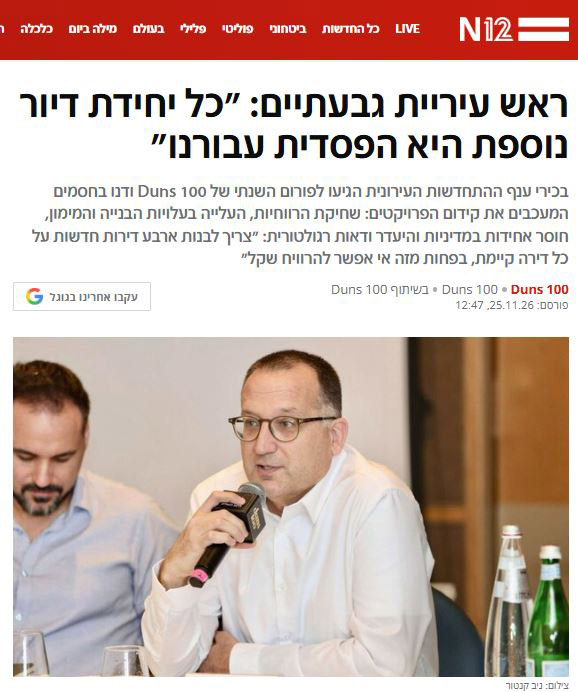
The discussion brought together the perspectives of developers, who must maintain project feasibility over several years, and local authorities, which are required to provide municipal services while expanding the housing supply. Kunik addressed the differences between single-building renewal and large-scale neighborhood redevelopment in Givatayim, as well as the impact of the municipal property tax system (Arnona) on the municipality’s ability to promote residential development.
Quote from the Forum
“Every housing unit represents a financial loss for the local authority. There is a structural flaw in the way the State of Israel seeks to promote urban renewal.”
Ran Kunik, Mayor of Givatayim
Key Topics Discussed at the Forum
Urban Renewal as a Response to the Need for Residential Protection
Against the backdrop of the ongoing conflict, participants discussed the urgency of advancing urban renewal in areas where residents live in buildings without adequate protection. The discussion focused on the gap between residents’ immediate needs and the time required to plan, approve and execute projects.
Labor Shortages and the Pace of Construction
Labor shortages in the construction industry are affecting the ability to launch new projects and meet the timelines of those already underway. The discussion focused on the impact of construction delays on costs and the ability to advance multiple projects simultaneously.
Interest Rates, Financing and Economic Feasibility
Participants examined how interest rates and financing conditions influence decisions regarding whether and when to launch a project. In projects spanning several years, changes in financing or construction costs may affect economic feasibility even after the planning process has reached an advanced stage.
From Approved Plans to Building Permits
The growing number of housing units in the planning pipeline and in approved plans prompted a discussion about the pace of transition to building permits and actual construction. Participants addressed the uncertainty throughout the project lifecycle and the difficulty of relying, at the permitting stage, on assumptions made years earlier during the planning process.
The Municipal Property Tax System and Local Authorities’ Ability to Expand Housing Supply
Ran Kunik presented the challenge from the perspective of local government. According to Kunik, under the current municipal property tax system, the additional revenue generated by residential development does not cover the cost of providing services to residents. He explained how this gap increases municipalities’ dependence on revenue from commercial and employment properties and affects the ability of local authorities such as Givatayim to expand their housing supply.
The forum is part of Duns 100’s ongoing commitment to providing a professional platform that brings together senior industry leaders and local government decision-makers. The meeting enabled participants to explore shared challenges from both developers’ and local authorities’ perspectives and engage in a productive dialogue on the issues shaping the pace of urban renewal in Israel.
Gallery
You may also like
-
 DUN'S 100
Employing Contractor and Staffing Agency Workers: How to Reduce Exposure to Labor Law Claims
In recent years, labor courts have expanded the responsibility of service recipients toward contractor employees. Adv. Menachem Ofer, Partner and Head of the Labor Law Department at Steinmetz, Haring, Gurman & Co., explains how companies can reduce their legal and financial exposure.
Employing Contractor and Staffing Agency Workers: How to Reduce Exposure to Labor Law Claims
-
 DUN'S 100
Adv. Meni Gurman: How the Capital Market Is Expected to Respond to Israel’s Elections
“If the election results reflect a continuation of conduct perceived as positive, the market will respond positively,” says Adv. Gurman.
Adv. Meni Gurman: How the Capital Market Is Expected to Respond to Israel’s Elections
-
 DUN'S 100
In the Age of Artificial Intelligence, We All Need to Think Like Physicists
Artificial intelligence can shorten the path to an answer, but scientific thinking is what turns an answer into understanding and real business value.
In the Age of Artificial Intelligence, We All Need to Think Like Physicists